Ultimate Guide to Whole-House Fans: Cooling Your Home Efficiently
Stuffy rooms. Long, sticky nights. Sky-high AC bills that seem to climb with every summer. Sound familiar? You’re not alone. Many homeowners crave a better way to cool their homes without draining their wallets or the planet.
At Almeria Heating & Cooling, we’ve seen firsthand how a whole-house fan can feel like opening the windows to a fresh breeze—only smarter. Whether you’re exploring new ways to boost comfort or searching for “Dehumidifiers near you” and other emergency hvac solutions, this guide has you covered.
What is a Whole-House Fan? 🌬️
Picture this: instead of fighting the heat by blasting cold air, you draw in the cool outdoor air and push out the hot, stale air lingering inside. That’s the magic of a whole-house fan.
How It Works
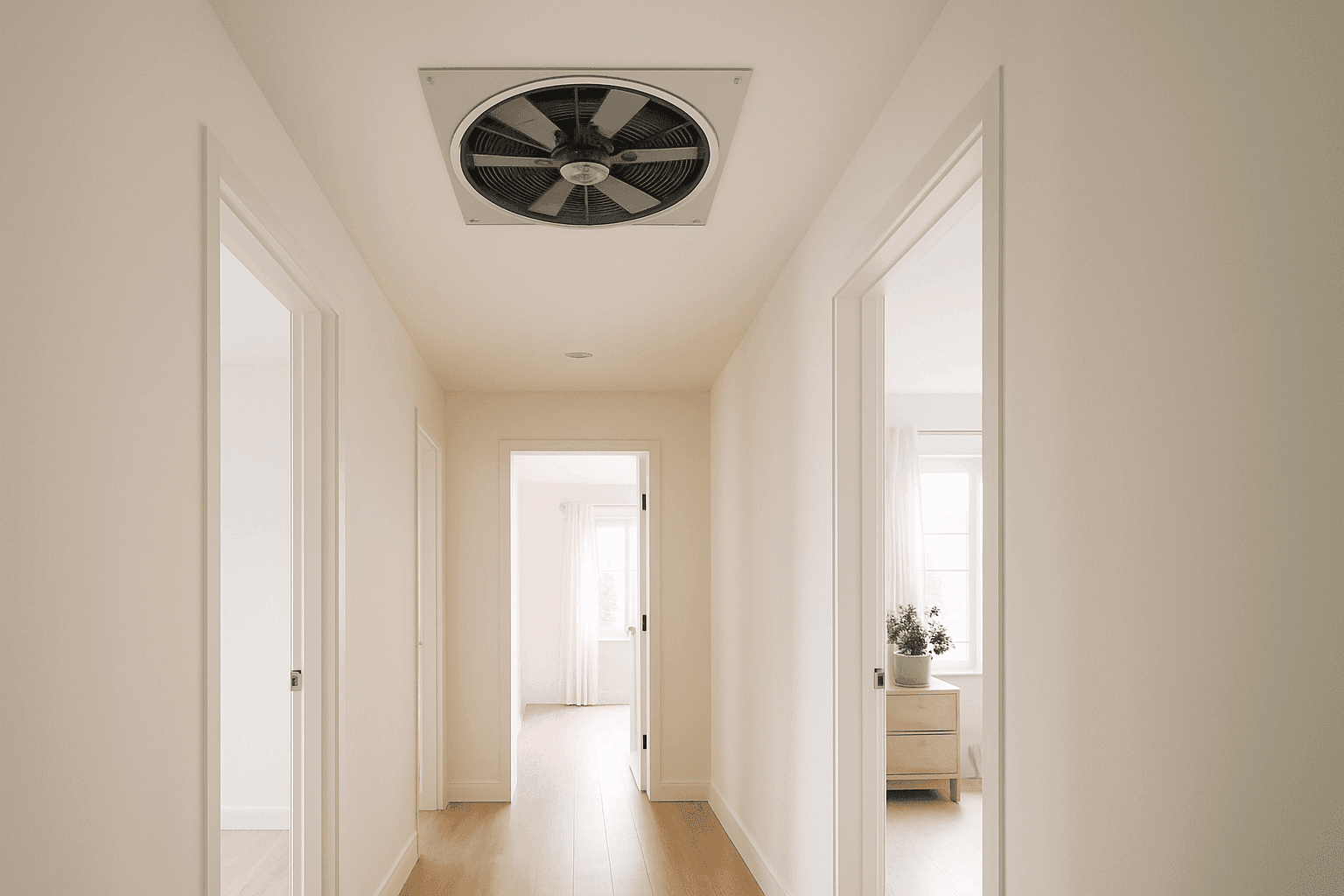
A whole-house fan is typically installed in the ceiling of your home’s main hallway or central area. When switched on, it pulls fresh air in through open windows and pushes warm air up into the attic and out through attic vents. The result? A breeze that feels as refreshing as stepping under a shady tree.
Whole-House Fans vs. Attic Fans
It’s easy to confuse the two, but here’s the trick:
- Whole-house fans move indoor air outside and pull in outdoor air, cooling your whole living space.
- Attic fans only ventilate the attic to reduce heat buildup above your ceiling—not the air inside your living areas.
Whole-house fans can drop your indoor temperature by several degrees in just minutes. Attic fans help, but don’t offer the same instant comfort.
Benefits for Homeowners
Why have so many families made the switch? Here’s what whole-house fans bring to the table:
Lower Energy Bills
Cooling your home with a whole-house fan uses about one-tenth the electricity of central air conditioning (according to the U.S. Department of Energy). That means more money in your pocket for summer adventures—or just peace of mind.
Better Air Quality
Whole-house fans don’t just cool; they refresh. Stale air, cooking odors, pet smells, and airborne particles get whisked out, replaced by crisp air from outside. For families with allergy concerns or those interested in “indoor air quality” upgrades, this is a huge plus.
Fast Comfort
On cooler evenings or mornings, a whole-house fan can drop indoor temps in 20 minutes or less. No waiting for the AC to catch up.
Environmental Benefits
Less AC use means less electricity demand, which helps reduce your home’s carbon footprint. It’s a win for your comfort—and the planet.
Flexible Operation
Whole-house fans work beautifully with other systems: dehumidifiers, air scrubbers, and even emergency hvac setups when you need quick relief.
Installation and Use Tips
Ready to cool your home the smart way? Here’s what you need to know before diving in.
Sizing Matters
Like shoes, one size definitely doesn’t fit all. A fan that’s too small won’t cool efficiently. Too large, and you might create drafts or noise. The right size depends on your home’s square footage and layout.
Quick rule of thumb: Most homes need a fan rated at 2–3 times the volume of the living space (measured in cubic feet per minute, or CFM). A professional can help you calculate the perfect fit.
Placement Is Key
Proper placement ensures the fan draws air evenly from every room. Most are installed in a central hallway ceiling for best results. Attic ventilation also needs to be checked—if there’s not enough, hot air can’t escape fast enough.
DIY or Professional Installation?
Some handy homeowners tackle installation themselves, but there’s more to it than cutting a hole and plugging in a fan.
- Electrical safety: Fans need dedicated wiring and secure mounting.
- Building codes: Many cities have codes about fan size, attic venting, and fire safety. Always check your local rules or consult a licensed technician.
- Warranty: Many manufacturers require professional installation to maintain coverage.
Almeria Heating & Cooling’s technicians have installed whole-house fans in homes from coast to coast, so we know the ins and outs of local codes and best practices.
Using Your Whole-House Fan
- Open windows in the rooms you want to cool before turning on the fan.
- Run the fan during cooler times—early morning or late evening—for best results.
- Close windows and turn off the fan as outdoor temperatures rise or humidity increases.
Energy Savings and Rebates
A well-installed whole-house fan can slash your AC use by up to 90% during mild weather (per California Energy Commission studies). Many local utilities also offer rebates for whole-house fan installations—check with your energy provider for current incentives.
Safety Checklist for Homeowners
Before installing or using a whole-house fan, keep these essentials in mind:
- Ensure attic vents are clear and sized correctly.
- Use only UL-listed fans and professional-grade wiring.
- Keep flammable materials away from attic spaces.
- Never operate the fan with all windows and doors closed.
- Schedule annual maintenance to check wiring, belts, and fan blades.
DIY vs. Call a Pro
DIY: If you’re comfortable with electrical work and have experience with home projects, installation is possible. But mistakes can lead to costly repairs—or safety risks.
Professional: Licensed technicians ensure everything meets local codes and works safely. They’ll help you choose the right fan, install it properly, and show you how to use it for maximum comfort.
At Almeria Heating & Cooling, we bring years of hands-on experience to every installation. We’re available 24/7 for emergency hvac needs, and can advise on everything from “Dehumidifiers near you” to custom ventilation solutions.
What Pros Do On Arrival
- Evaluate your home’s layout and attic space.
- Recommend the best fan size and placement.
- Inspect attic ventilation and address any issues.
- Install the fan, controls, and wiring to code.
- Test the system and explain operation.
- Offer tips on maintenance and energy savings.
Prevention & Maintenance
Like any home system, a whole-house fan needs routine care:
- Annual check-up: Inspect belts, wiring, and blades for wear.
- Clean filters and grilles: Dust and debris reduce efficiency.
- Listen: Unusual noises or vibrations can signal issues—don’t ignore them.
- Professional tune-up: Schedule with your trusted HVAC technician for peace of mind.
Costs & Time Factors
Installation costs vary by home size, fan model, and attic access. Most homeowners spend less than a new AC system—often recouping the investment within a few summers of energy savings. Installation time ranges from half a day to about a day for most homes.
When It’s an Emergency
If your AC fails on a scorching day, or you need ventilation after a power outage, a whole-house fan can be a lifesaver. Emergency hvac teams (like ours) can quickly assess, repair, or install fans to keep your home safe and comfortable, day or night.
FAQ: Whole-House Fans
Q: Will a whole-house fan work if it’s humid outside?
A: They work best when outside air is cooler and less humid than inside. For high-humidity climates, pairing with dehumidifiers can help.
Q: Are whole-house fans noisy?
A: Modern models are much quieter than older ones. Proper installation and insulation reduce noise to a soft hum.
Q: Does a whole-house fan replace my AC?
A: Not entirely. It supplements your AC, reducing the time you need to run it, especially during cooler evenings.
Q: Can I use a whole-house fan year-round?
A: Typically, they’re used in spring, summer, and fall. In winter, sealing or covering the fan helps keep warm air inside.
Local & Seasonal Considerations
Climate plays a role. In areas with cool nights and warm days, whole-house fans shine. For homes in humid regions or with lots of pollen, consider pairing with air scrubbers or advanced IAQ testing for best results.
If wildfires or air quality alerts are common in your area, close windows and avoid running the fan until outdoor air improves—your safety comes first.
A whole-house fan can transform your home’s comfort, energy use, and air quality—often for less than you think. Not sure where to start? Our team at Almeria Heating & Cooling is here to help, with 24/7 emergency hvac service and decades of experience in fan installation and maintenance.
Call Almeria Heating & Cooling now — or reach us anytime at 844-668-4468 .